Community-led project preserves Nigeria’s endangered Kam language
A decade-long initiative in Taraba State has empowered local speakers to document the Kam language, producing a dictionary, grammar guide, and hundreds of recordings through a decentralized model.


- The Kam Language Project ran from 2016 to March 2026 in Taraba State, Nigeria.
- Kam is spoken by an estimated 8,000–11,000 people across 29 villages.
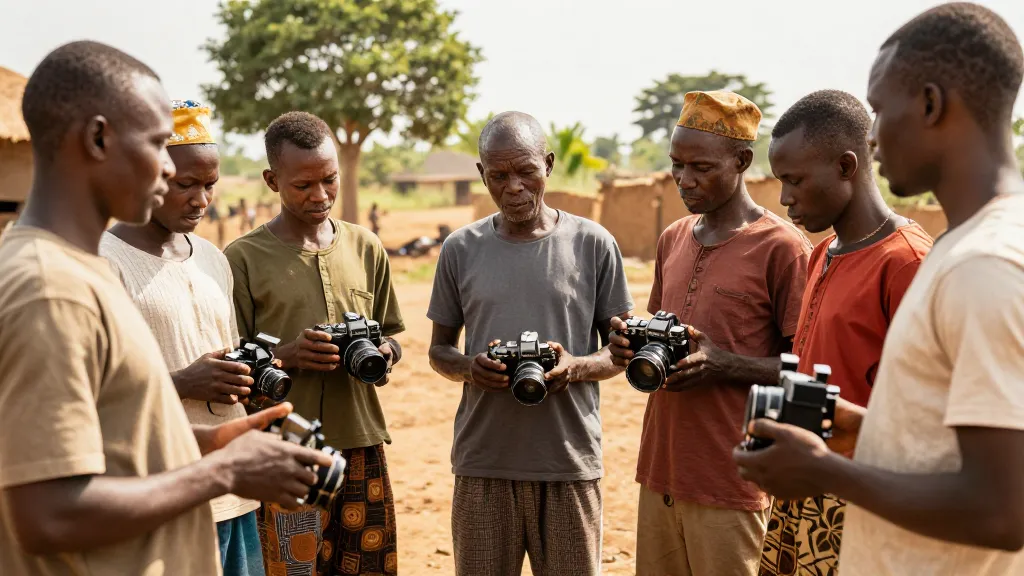
- A team of 14 local community members was trained to document the language using a decentralized model.
- Outputs include a grammar reference, digital dictionary, and 307 audio/video recordings.
- The project adapted to COVID-19 restrictions by using remote training and local equipment logistics.
A ten-year community-led campaign has successfully documented the Kam language, an endangered tongue spoken by approximately 8,000 to 11,000 people in 29 villages within Nigeria’s Bali Local Government Area. The project, which concluded in March 2026, represents a shift toward decentralized linguistic preservation, where local residents lead the documentation process rather than relying solely on external experts.
A Decade of Documentation
Dr. Jakob Lesage, a linguist at Humboldt-Universität zu Berlin, initiated the Kam Language Project in 2016. Prior to this effort, Kam (also known as Nyingwom) had received no scientific attention, leaving it without written literature, a standardized orthography, or audiovisual records.
By March 2026, the project had produced significant resources, including:
- A comprehensive grammar reference for Kam.
- A digital Kam dictionary.
- 307 audio and video recordings of native speakers.
- A dedicated website hosting these materials.
The initiative employed a “decentralized” approach. Instead of parachuting in as the sole authority, Dr. Lesage trained a team of 14 Kam community members to handle recording, transcription, and translation. This model ensured that the community determined what content was valuable to preserve, such as oral histories and local knowledge.
Challenges and Adaptation
The project faced significant hurdles, most notably the COVID-19 pandemic, which halted international travel. This disruption forced a pivot to remote training and highlighted the fragility of traditional fieldwork models that depend on physical presence.
To continue work, the team relied on local expertise. Elisha Yunana, from a nearby community with documentation experience, helped train an initial group of ten Kam members. Equipment procurement also proved difficult; because Dr. Lesage’s university could not purchase gear locally in Nigeria, he bought recording devices in Germany and arranged for them to be shipped via friends traveling to the region.
Technical challenges included unreliable internet connectivity in the villages. The team solved this by routing large audio and video file uploads through contacts in Jalingo, the state capital, where connections were more stable. Additionally, because Kam has no existing writing system, the team developed a transcription method based on speaker intuition rather than imposing an external structure.
Community Ownership
Babangida Audu, who served as the language documentation coordinator, described how the project began when Dr. Lesage consulted local elders in 2016. “I joined the project because I wanted my language to move forward,” Audu said. He noted that while communication initially required patience due to language barriers, the collaborative spirit allowed for effective knowledge transfer.
Garba Rahab Precious, another team member, emphasized the value of training locals in technical skills. “The project crew were trained to use cameras for videos and audio recordings... On a typical day of documentation, we go to Kam villages and interview native speakers on different topics,” she explained.
Preserving Cultural Heritage
Dr. Lesage describes Kam as “locally stable but vulnerable.” While the language is still actively spoken, it faces pressure from urbanization and economic shifts. As villagers migrate to cities like Jalingo for work or due to climate-related farming difficulties, they often adopt Hausa, the dominant regional language, causing Kam usage to decline in daily life.
“Language loss is never just about language,” Lesage stated. “A language lives in the contexts where it’s used. When those contexts disappear, the language starts to slip too.”
The project aims to ensure that Kam’s linguistic heritage remains accessible to future generations. Dr. Lesage asserts that ownership of this heritage belongs to the Kam community, and all created materials are designed to be publicly accessible.
“If this language were to disappear tomorrow... The Kam world would lose a lot: Jokes, stories, how people express their relationships to one another, a way to keep things secret from people who don’t speak the language. For the rest of the world, it would mean losing a window on human culture and language that we haven’t fully been able to open yet.”
— Dr. Jakob Lesage
Corrections: [email protected]