Stateless Communities in Malta Assert Identity Beyond Legal Recognition
Participants at a gathering organized by the Apatride Network in Malta shared how they maintain cultural belonging and identity despite being denied citizenship by states.
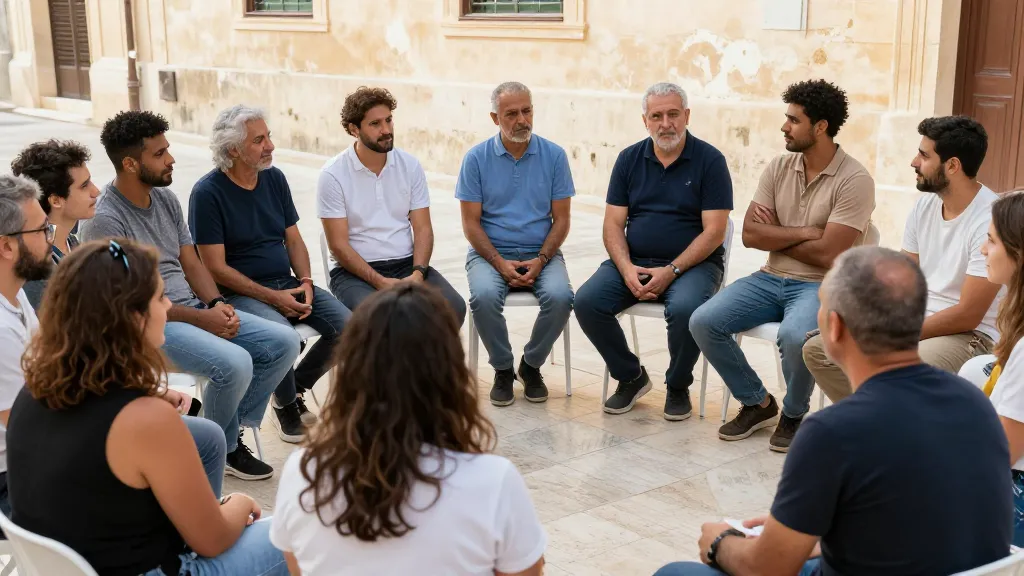


- The Apatride Network hosted a three-day 'Hearing and Healing' gathering in Malta in March 2026.
- Participants emphasized that identity and belonging persist independently of state-granted citizenship.
- Statelessness is described as a continuous administrative challenge to one's existence, not just a lack of travel documents.
- The Apatride Network has achieved legal victories including recognition of Latvian non-citizens in Czech courts.
- Community institutions and cultural preservation serve as affirmations of existence for stateless people.
In late March 2026, the stateless-led organization Apatride Network, with funding from Porticus, hosted a three-day event titled Hearing and Healing in Malta. The gathering brought together individuals from various stateless communities to share personal experiences and collectively reflect on the realities of living without nationality.
The participant-led forum moved beyond formal policy discussions to center lived experience as essential for understanding statelessness. Attendees listened to one another, identified commonalities across different historical contexts, and began formulating shared goals for future advocacy.
A central theme of the discussions was how individuals define their identity and cultural belonging when states systematically exclude them based on political, religious, ethnic, or other arbitrary criteria. The authors—Albert Ioffe, Jawad Fairooz, and Aleksejs Ivashuk of the Apatride Network—note that while citizenship is often an invisible aspect of daily life for most, providing legal recognition and security, its absence reveals the profound power states hold over individual existence.
Participants described statelessness not merely as the lack of a passport, but as a continuous challenge to one’s existence by administrative systems that refuse to acknowledge their identity. Many reported growing up with deep connections to their communities while simultaneously facing legal barriers that questioned their place in society. This creates a significant tension between lived belonging and formal legal recognition.
Despite these exclusions, the gathering highlighted how stateless people respond by strengthening community institutions, preserving languages and traditions, documenting history, and maintaining cross-border networks. These actions serve as affirmations of existence against erasure.
The authors argue that identity is shaped by factors independent of citizenship, including family, language, shared memories, and collective history. They contend that attempts to revoke these aspects through administrative decisions threaten the freedom and security of all individuals, not just those currently stateless.
Healing, according to participants, begins when experiences of statelessness are acknowledged and shared. The event demonstrated that while states define legal status, they do not have absolute authority over identity or belonging, which emerge from lived experience, culture, and mutual recognition.
The Apatride Network, based in the European Union, focuses on impact projects, legal assistance, strategic litigation, and awareness-raising. Its work has contributed to improvements in European banking regulations for vulnerable populations, removed administrative barriers to employment for stateless persons at the UNHCR and UN Secretariat, and achieved Czech judicial recognition of Latvian “non-citizens” as de jure stateless.
The gathering in Malta reinforced the view that while statelessness isolates individuals, sharing stories reconnects them. It transforms invisible experiences into collective understanding, reminding society that identity is defined by lives lived and communities belonged to, not just by documents held.
Corrections: [email protected]