Stateless Traveler Exposes Systemic Barriers and Misinformation in Global Travel
Sam March recounts the exhausting journey to Geneva for the Global Refugee Forum, highlighting how statelessness creates bureaucratic nightmares, airline ignorance, and a reliance on favors rather than rights.
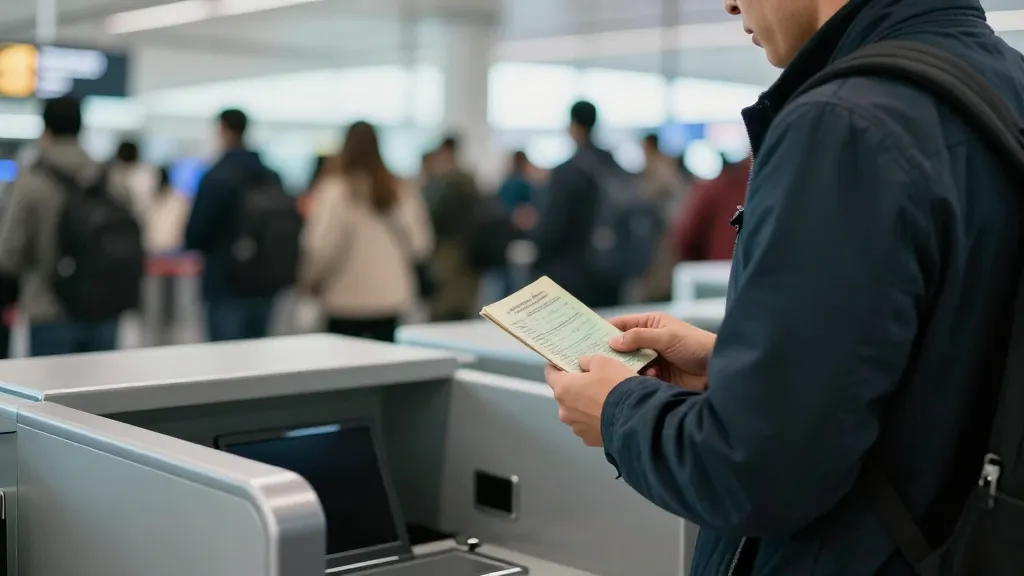


- Sam March traveled to Geneva for the Global Refugee Forum after a five-year struggle to obtain a travel document.
- March was initially denied a visa because the embassy did not accept their specific stateless travel document, despite online guidelines suggesting otherwise.
- Entry was eventually granted via a limited territorial visa secured through personal favors and invitations, not standard procedure.
- Airlines and transit embassies displayed significant ignorance regarding stateless travelers, offering no clear guidance on booking or transit rights.
- An estimated 15 million people worldwide are stateless, lacking nationality and fundamental human rights.
Sam March, a person born stateless, recently undertook a harrowing journey to Geneva, Switzerland, to present at the Global Refugee Forum (GRF). The trip, organized by the Global Movement Against Statelessness (GMAS), was intended to be a professional opportunity but instead became a stark illustration of the systemic inequities faced by the estimated 15 million stateless people worldwide.
The Paradox of Travel Documents
March had spent five years struggling to obtain a travel document, only to receive one that omitted their date and place of birth—a detail they felt erased part of their identity. Despite holding this document, which is legally designed to grant the right to travel, March encountered immediate barriers.
The first obstacle was misinformation from diplomatic channels. Although embassy websites listed an option for stateless applicants, March was denied a visa application at the appointment because the specific travel document was not accepted by the embassy. This contradiction highlights a global inequity where documents meant to facilitate movement are rendered useless by inconsistent national policies.
Ultimately, March secured entry only through a "limited territorial visa" obtained via personal favors and letters of invitation. While successful, this outcome underscored a painful reality: access was granted not as a right, but as an exception dependent on external intervention.
Airline Ignorance and Bureaucratic Fear
The second major hurdle was the aviation industry’s lack of awareness regarding statelessness. When attempting to book flights, March was directed to "special assistance" pages for wheelchair users or caretakers, indicating that airline systems do not recognize stateless travelers as a distinct category.
Customer service representatives provided vague scripts, insisting only that the passenger must have the right to enter the destination country. Transit embassies offered equally non-committal responses, stating that while staying in the transit area might be permissible, border control decisions were unpredictable. This lack of clear guidance forced March to travel with constant anxiety about potential detention.
Arrival and Reflection
The journey culminated at passport control in Geneva, where March described feeling like a "condemned man walking to his execution." The officer on duty was too tired to scrutinize the documents closely, asking only where the stamp should be placed. While this allowed entry, it did not alleviate the exhaustion and humiliation of the process.
March argues that these experiences are not isolated incidents but symptoms of a broader systemic failure. Governments often use travel documents for surveillance and control rather than to guarantee human rights. The assumption that stateless individuals will never travel allows embassies and airlines to ignore their needs, driven by bureaucracy and a lack of incentive to accommodate them.
"Statelessness is not a particular group problem but an issue for every human being," March concludes, urging global solidarity to eradicate a status that strips individuals of fundamental rights and dignity.
Corrections: [email protected]