Chinese Parents Outsource Control of Adult Children to Private Discipline Camps
Families in China are paying private institutions to detain adult children who defy parental expectations, exploiting legal loopholes and rebranding coercion as behavioral therapy.
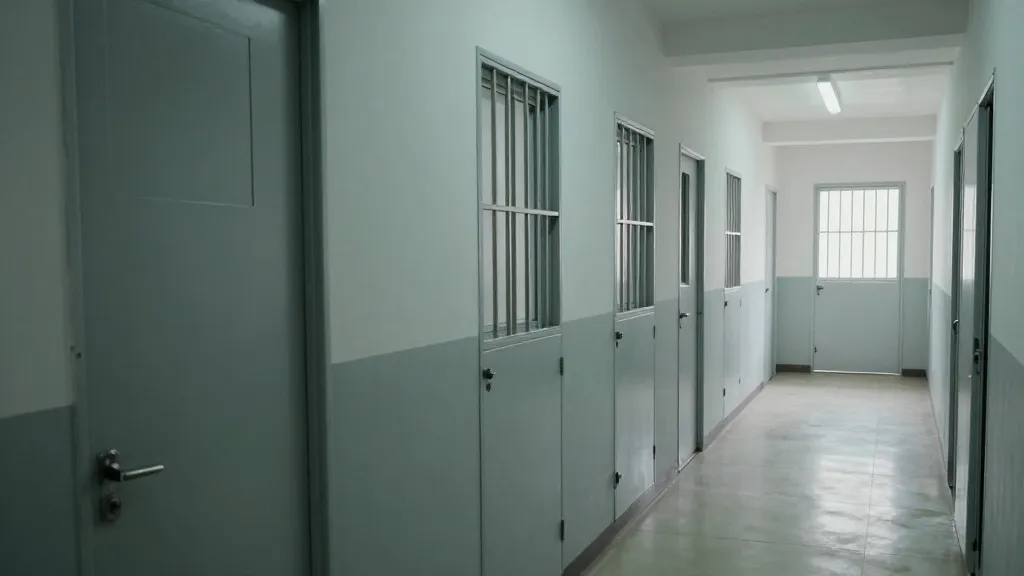


- Private institutions in China are detaining adults aged 21-33 at the request of their parents.
- Detainees are held for reasons including romantic relationships, sleep habits, or career choices.
- Fees for confinement can reach 36,800 yuan (USD 5,451) annually per person.
- Police often refuse to file criminal charges, citing parental authorization as consent.
- "Internet addiction" is used as a flexible label to justify confinement despite lacking ICD-11 recognition.
Private disciplinary institutions in China are increasingly detaining adults against their will, paid for by parents seeking to control the lives of fully independent children. Investigations reveal a growing industry where families purchase confinement, surveillance, and psychological pressure to enforce obedience under the guise of education or rehabilitation.
In March 2026, a 21-year-old music student in Beijing was abducted by her father, aunt, and employees of a private institution. Despite being an adult with full civil capacity, she was forced into a van, had her phone confiscated, and transported to Henan province for "internet addiction rehabilitation." She remained detained for 11 days until staff claimed she had forgotten her boyfriend—the actual reason for her confinement.
This case reflects a broader pattern documented by China Newsweek in July 2026. Adults aged 21 to 33 have been seized from their homes or lured under false pretenses and held in facilities across provinces including Hubei, Chongqing, and Jiangxi. Reasons for detention include romantic relationships, irregular sleeping habits, unemployment, or simply resisting parental demands.
These institutions charge significant fees, with one facility reported to cost 26,800 yuan (USD 3,970) for six months. While "internet addiction" is not recognized in the International Classification of Diseases (ICD-11), China has treated it as a clinical issue since 2008. This terminology allows families to frame behavioral disagreements as medical disorders, justifying confinement as treatment.
Legal enforcement remains weak. Although Article 238 of China’s Criminal Law prohibits unlawful detention, police often dismiss complaints from adult detainees. In the Beijing student’s case, authorities issued a non-filing notice stating there were "no criminal facts," despite evidence of abduction and forced confinement. Police frequently accept parental authorization as sufficient consent, ignoring the lack of voluntary agreement from the detained adults.
Facilities use controlled recordings to manipulate narratives presented to police, having detainees claim they are safe and grateful. With no official count of such centers or detainees, experts estimate hundreds, if not thousands, of adults may be held nationwide. The industry thrives on a cultural expectation that parental authority supersedes adult autonomy, turning coercion into a commercial service.
Corrections: [email protected]