Global Report: Transphobia Weaponized in Elections, Trans Voters Face Disenfranchisement
A new report by Outright International highlights how politicians worldwide are using anti-trans rhetoric to win votes, while trans candidates face violence and voters encounter barriers at polling stations.


- Anti-LGBTIQ+ campaigning occurred in 51 of 61 jurisdictions examined in Outright International's 2024 report.
- The U.S. Republican Party spent over USD 215 million on anti-trans television ads during the 2024 election cycle.
- Only 18 countries globally allow trans people to update gender markers on official documents via self-determination.
- India and Nepal elected their first openly trans lawmakers in 2026.
- Trans candidates in Brazil and Pakistan faced physical violence and harassment during recent elections.
Elections globally have increasingly become arenas where transphobia is weaponized by politicians to secure votes and discredit opponents. According to a report by global LGBTIQ+ advocacy group Outright International, hate toward lesbian, gay, bisexual, trans, intersex, and queer (LGBTIQ+) people was featured in approximately 85 percent of countries holding elections in 2024.
Weaponizing Transphobia
Outright’s “Queering Democracy” report, which examined 61 jurisdictions, found that politicians engaged in anti-LGBTIQ+ campaigning in 51 of them. In Ghana, the presidential election was characterized as a competition to demonstrate the strongest homophobia, with candidates vying to enact laws criminalizing trans and queer identities.
In the United States, the Republican Party spent over USD 215 million on television ads attacking trans rights during the 2024 cycle. These campaigns often fabricated fears regarding healthcare access and public facilities, despite these issues not being primary voter priorities. Similarly, in North Macedonia, the far-right VMRO-DPMNE party secured a parliamentary majority by falsely labeling comprehensive sexuality education as “gender ideology” and “indoctrination.”
This trend continues into 2026. In Colombia, president-elect Abelardo de la Espriella campaigned against “gender ideology,” claiming it contaminates children’s views on sexuality. In Germany, the far-right AfD party unveiled an extremist platform ahead of the Saxony-Anhalt state election, vowing to abolish gender studies and quotas. Meanwhile, U.S. Republicans are placing anti-trans measures on ballots in at least four states for the November 2026 midterms.
Attacks on Candidates
Trans candidates face disproportionate hostility and violence. In Pakistan, a trans candidate and her team were physically attacked by an affiliate of the Islamist party Jamaat-e-Islami in 2024. In Brazil, a local trans candidate was decapitated a month after the election, while others faced thousands of transphobic online comments.
Non-trans politicians are also targeted using transphobic tropes. In France, rumors falsely claiming President Emmanuel Macron’s wife is trans were circulated during his 2022 reelection campaign. In Canada, far-right media attacked Prime Minister Mark Carney in 2025 by targeting his nonbinary child.
Disenfranchisement at the Polls
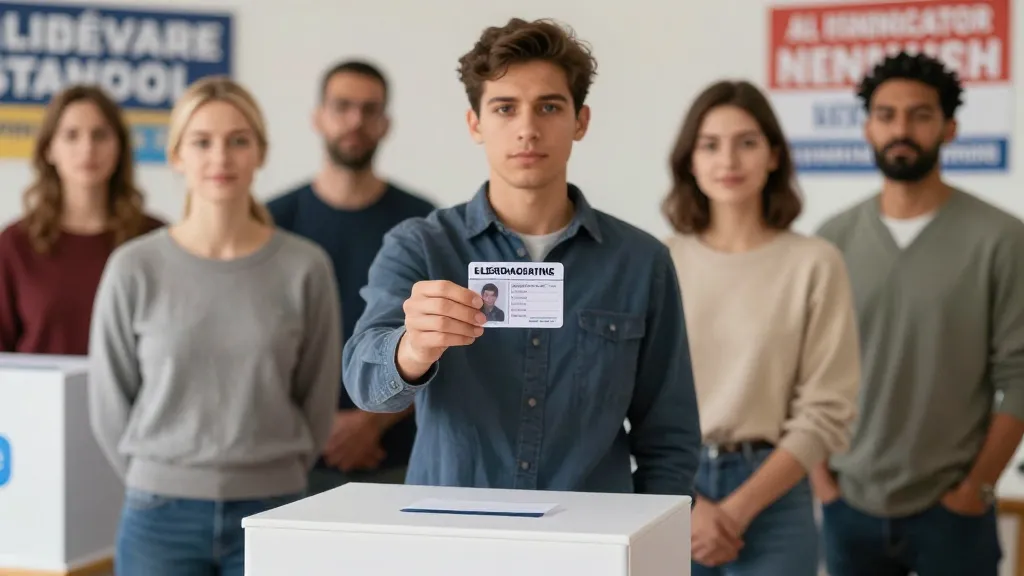
Beyond political rhetoric, trans people face structural barriers to voting. Only 18 countries allow gender marker changes based on self-determination; 42 impose medical or bureaucratic hurdles, and most prohibit changes entirely. This mismatch between appearance and legal documents leads to discrimination at polling stations.
In Bangladesh, poll workers turned away trans voters whose documents did not match their appearance, despite the country recognizing a “third gender” category. In Indonesia, staff refused to allow some trans people to vote for similar reasons. Even in Colombia, where electoral protocols protect against such discrimination, observers documented cases of misgendering and demands for extra proof of identity during the 2026 elections.
In Spain, a country with self-determination laws, a trans man was accused of fraud and denied voting rights in the 2024 European Parliament elections. In Bhutan, segregated polling queues based on sex assigned at birth create difficulties for trans and nonbinary individuals who have not changed their legal markers.
Advancing Participation
Despite these challenges, progress is being made. India and Nepal elected their first openly trans lawmakers in 2026. In Uganda, advocates organized voter education and safety training for trans youth ahead of the general election. In Thailand, legal gender recognition was included in the opposition People’s Party’s platform following sustained advocacy.
Outright International emphasizes that democracies are strengthened when all citizens can participate fully. The group is currently drafting a follow-up report on the 2026 elections, scheduled for release in early 2027.
Corrections: [email protected]