Southern France Faces Severe 'Multi-Source' Pollution from Canadian Wildfires and Saharan Dust
Marseille and surrounding areas are under maximum pollution alert as smoke from Canadian wildfires mixes with Saharan dust, creating hazardous air quality levels.
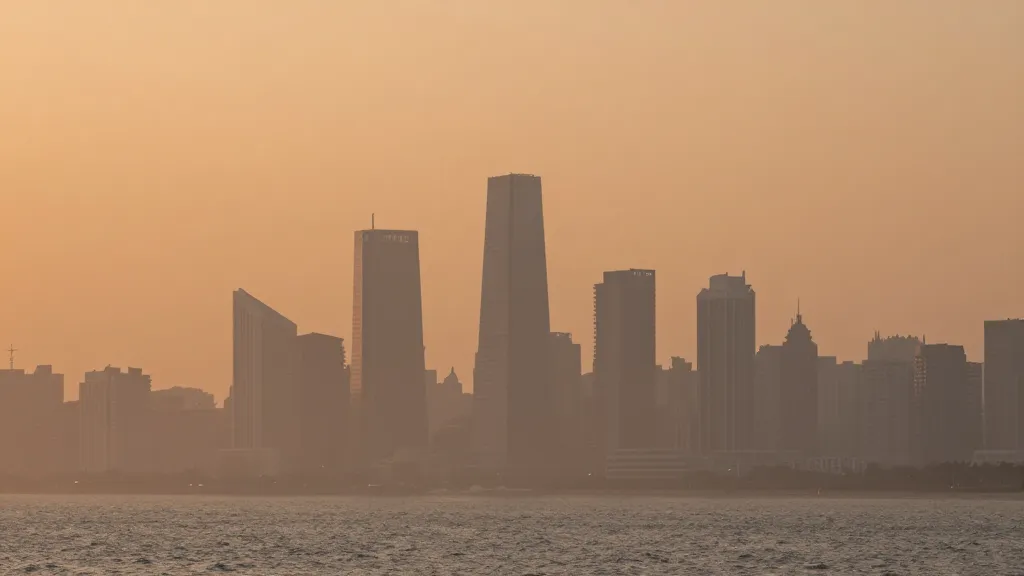


- Marseille's AQI reached 130-150 in mid-June, significantly higher than the typical summer range of 40-60.
- Smoke from Canadian wildfires, particularly a blaze burning over 300,000 hectares in Manitoba, crossed the Atlantic to mix with Saharan dust.
- French authorities activated maximum pollution alert level 2 on June 13 due to high concentrations of fine particles and ozone.
- Traffic restrictions were imposed in Marseille's Low Emission Zone, and outdoor activities were discouraged.
- AtmoSud reports that multi-source pollution episodes are becoming more frequent as climate patterns shift.
Southern France is currently experiencing a severe air pollution crisis driven by an unusual convergence of transcontinental pollutants. In mid-June, the skies over Marseille and the broader Provence-Alpes-Côte d'Azur region turned hazy as smoke from aggressive wildfires in Central Canada crossed the Atlantic Ocean to mingle with Saharan dust storms drifting north from Africa.
A Cocktail of Pollutants
During the peak of the episode, Marseille’s Air Quality Index (AQI) reached levels between 130 and 150. This is classified as "unhealthy for sensitive groups" and represents a significant spike compared to typical summer levels in the region, which usually range between 40 and 60.
Local authorities describe the situation as a "multi-source pollution episode." While Marseille frequently experiences Saharan dust events that bring orange haze and fine particles, this incident is distinct due to the added layer of wildfire smoke. According to AtmoSud, the regional air quality observatory, such overlapping pollution events are becoming more frequent and intense as climate patterns shift and fire seasons lengthen.
Wildfires in Canada
The source of the transatlantic smoke is a cluster of wildfires that ignited in Central Canada beginning in May. The fires have been particularly aggressive in Manitoba, Saskatchewan, and Alberta. In Manitoba alone, 27 wildfires remain active. One massive blaze near Flin Flon and Sherridon burned over 300,000 hectares in early June.
Experts warn that as these individual blazes creep northward, there is a risk they could merge into a "Giga-fire," a rare phenomenon where a single fire engulfs more than 400,000 hectares. The Canadian Interagency Forest Fire Centre reports that much of Northern Canada is facing wildfires that are currently out of control.
Health Risks and Official Response
The Prefecture of Bouches-du-Rhône, the regional state authority responsible for public safety, activated pollution alert level 2 on June 13. This is the highest possible alert level in France. Air quality monitors recorded dangerous concentrations of fine particles (PM2.5 and PM10), ozone, and desert dust.
AtmoSud reported that pollution levels exceeded official health safety standards for four consecutive days. The combination of fine particles and ground-level ozone poses significant health risks, particularly for children, the elderly, and individuals with pre-existing respiratory or cardiovascular conditions. Exposure can worsen asthma, trigger respiratory infections, and strain the heart, potentially leading to hospital saturation.
Restrictions Imposed
In response to the hazardous air quality, local authorities have implemented several measures to reduce emissions and protect public health:
- Traffic Restrictions: Circulation within Marseille’s Low Emission Zone (ZFE) has been limited to only the least-polluting vehicles.
- Speed Limits: Speed limits on major roads were lowered by 20 kilometers per hour due to reduced visibility and to cut emissions.
- Activity Advisories: Outdoor physical activities have been officially discouraged for residents.
This event highlights how rising global temperatures are transforming local air pollution into transcontinental threats. For coastal cities like Marseille, which already face challenges from heat waves, drought, and rising sea levels, distant environmental disasters are increasingly carried directly into the air people breathe.
Corrections: [email protected]