Quebec's Secularism Laws Spark Debate on Women's Rights and Religious Freedom
As Quebec expands bans on religious symbols in schools and daycares, critics argue that both mandatory veiling and forced unveiling undermine women's agency and equality.
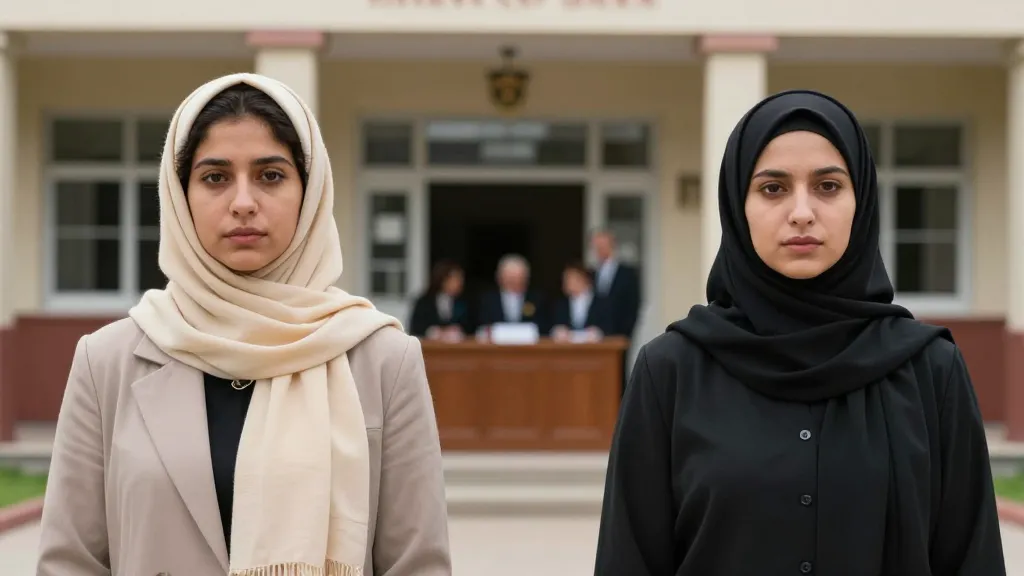


- Quebec has expanded secularism laws to ban religious symbols for students, teachers, and volunteers in public schools.
- The Quebec government plans to extend the ban on religious symbols to daycare centers, citing neutrality concerns.
- The federal government is challenging Quebec's use of the notwithstanding clause to protect Bill 21 from constitutional review.
- Critics argue that both mandatory veiling in countries like Iran and bans in Western nations undermine women's agency.
- Legal experts are divided on whether Quebec's laws preserve provincial independence or weaken minority rights.
The debate over the Islamic veil has intensified globally, with critics arguing that whether governments mandate or ban head coverings, women ultimately lose their right to self-determination. In 2025, Switzerland enforced a nationwide ban on the burqa, followed by Portugal. In Canada, Quebec has expanded its secularism laws, prohibiting students, teachers, and volunteers in public schools from covering their faces or wearing religious symbols.
Quebec's Expanding Secularism Laws
The Quebec government defends these measures as necessary for equality and neutrality. However, the policy has created significant barriers to education and employment for Muslim women who wear hijabs or niqabs. Women who previously worked as teachers or childcare providers are now excluded from their professions due to their choice of dress.
The restrictions are set to extend further into the childcare sector. The government plans to ban religious symbols in daycares, arguing this protects young minds from religious influence. Daycare directors and staff warn that this move will exacerbate existing staff shortages and drive away skilled workers. Critics argue that a teacher wearing a headscarf is not preaching but caring for children, and that the policy exposes a deeper societal fear of visible diversity.
Political Competition and Legal Challenges
Political competition in Quebec has intensified the issue. The opposition Parti Québécois has vowed to ban religious symbols for elementary school students if elected. Meanwhile, the ruling Coalition Avenir Québec party plans to restrict public prayers. Both parties are pushing minorities toward marginalization in a race to define secularism.
The conflict has moved to the courts. The federal government has challenged Quebec's use of the "notwithstanding clause" to shield Bill 21 from constitutional challenges. Ottawa argues that repeated use of this clause weakens the Canadian Constitution and undermines minority rights. Legal experts remain divided on whether this preserves provincial independence or sets a dangerous precedent. The upcoming Supreme Court decision will determine the limits of religious freedom and the extent to which governments can regulate private choices.
A Global Contradiction
This wave of bans is not limited to Canada or Europe. In parts of West Asia and South Asia, control operates in the opposite direction. In Afghanistan, women are forced by law to wear the burqa under Taliban rule. In Iran, women face punishment for removing their hijabs. While some restrictions have eased in Saudi Arabia, women still live under moral policing. In countries like Syria, Jordan, and Egypt, traditional pressures continue to push women toward conformity.
Critics highlight a striking contradiction: Western democracies often condemn religious coercion abroad while imposing their own dress codes at home. Proponents of bans argue that removing the veil aids integration, but opponents say this pushes women further to the margins. A Muslim woman choosing to wear a headscarf in Paris or Toronto should not have to defend her choice any more than someone choosing not to wear one in Tehran.
The Argument for Agency
Opponents of the bans argue that true equality comes from opportunity, not uniformity. Excluding women from classrooms, offices, and daycares strips them of economic independence and sends a message that religion and public service are incompatible. When governments control what individuals believe or wear, society becomes less accommodating.
Many Western leaders champion women's rights in other countries while failing to defend those of their own citizens. This double standard exposes the political nature of the debate, suggesting that fear of difference, rather than religion itself, is the driving force behind these policies.
What is often missing from these debates is the voice of women themselves. For some, the hijab is an act of faith; for others, it is cultural or personal. The core issue is not whether a woman covers her face, but whether she has the freedom to decide without fear or punishment. True liberation requires respecting individual choice rather than enforcing state-mandated uniformity.
Corrections: [email protected]