Monarch Butterfly Population in Mexico Rebounds Amid Ongoing North American Decline
The area covered by monarchs wintering in Mexico doubled this year, offering a rare positive sign despite severe declines in western populations and broader habitat loss across the continent.
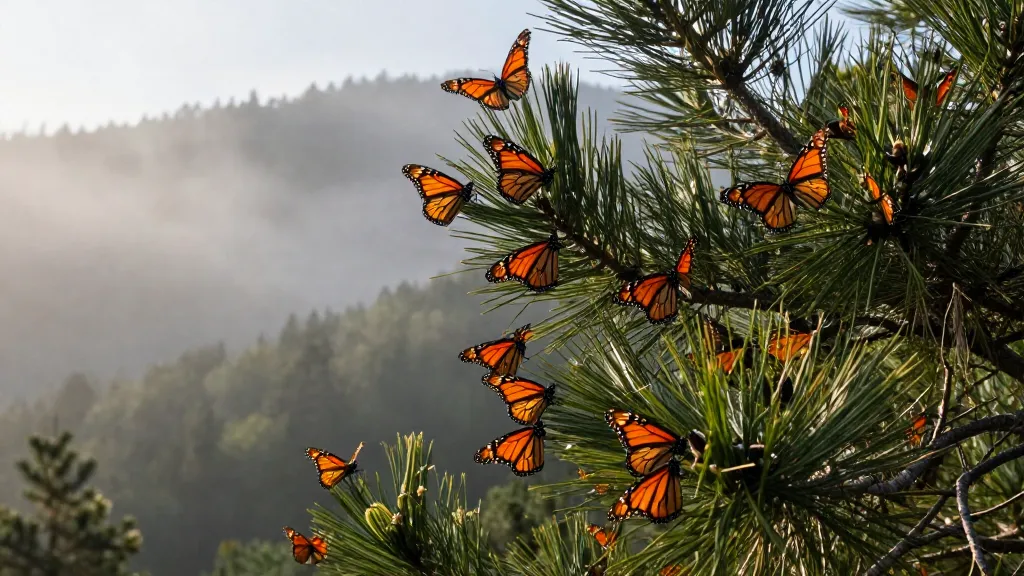


- Monarchs wintering in Mexico covered 1.79 hectares this year, double the 0.9 hectares recorded in 2024.
- Western U.S. monarch populations plummeted 96% in 2024 to just 9,119 individuals, a near-record low.
- U.S. butterfly abundance has declined an average of 1.3% per year since 2000, with 114 species showing significant drops.
- Habitat loss driven by drought, herbicides, and urbanization threatens milkweed, the monarchs' primary host plant.
- The U.S. Fish and Wildlife Service proposed listing monarchs as a threatened species in December.
The population of monarch butterflies wintering in central Mexico has rebounded significantly this year, doubling the forest area they occupied compared to the previous season. Experts reported Thursday that the iconic insects covered 1.79 hectares of mountain pine and fir forests west of Mexico City, a sharp increase from the 0.9 hectares recorded in 2024.
This recovery follows a concerning trend; last year’s figure represented a 59% drop from 2023 levels, marking the second-lowest count since record-keeping began. The annual survey measures the acreage covered by the butterflies rather than counting individual insects, as they cluster densely on tree branches to survive the winter.
Gloria Tavera Alonso, director general of conservation for Mexico’s Commission for National Protected Areas (CONANP), attributed the improved numbers to favorable climatic conditions and increased humidity. She noted that drought along the migratory route had been a primary driver of last year’s decline, highlighting how weather fluctuations continue to impact the species.
Despite this localized recovery, experts warn against complacency. Jorge Rickards, Mexico director general for the World Wildlife Fund, emphasized that conservation efforts must not waver. Tavera Alonso credited ongoing initiatives to restore milkweed and other sustenance plants along the flyway as crucial factors in the population’s resilience.
However, the outlook remains dire for monarchs elsewhere in North America. The Xerces Society for Invertebrate Conservation reported a catastrophic 96% drop in western overwintering populations in 2024, counting only 9,119 butterflies along the California coast and inland sites—a second-lowest total since surveys began in 1997.
A broader analysis published in the journal Science revealed that butterfly abundance in the contiguous United States has declined by an average of 1.3% annually since 2000. Of the species studied, 114 showed significant declines while only nine increased.
Habitat loss remains the primary threat across the continent. Milkweed, essential for monarch reproduction, is disappearing due to drought, wildfires, herbicide use, and urbanization. In response to these challenges, the U.S. Fish and Wildlife Service proposed in December listing the monarch butterfly as a threatened species under the Endangered Species Act.
Corrections: [email protected]