Amale Khlat: Why Silence Is More Dangerous Now Than Ever
Lebanese-British artist Amale Khlat argues that in an age of endless war imagery, silence has become complicit. Her installations force viewers to confront their own spectatorship.
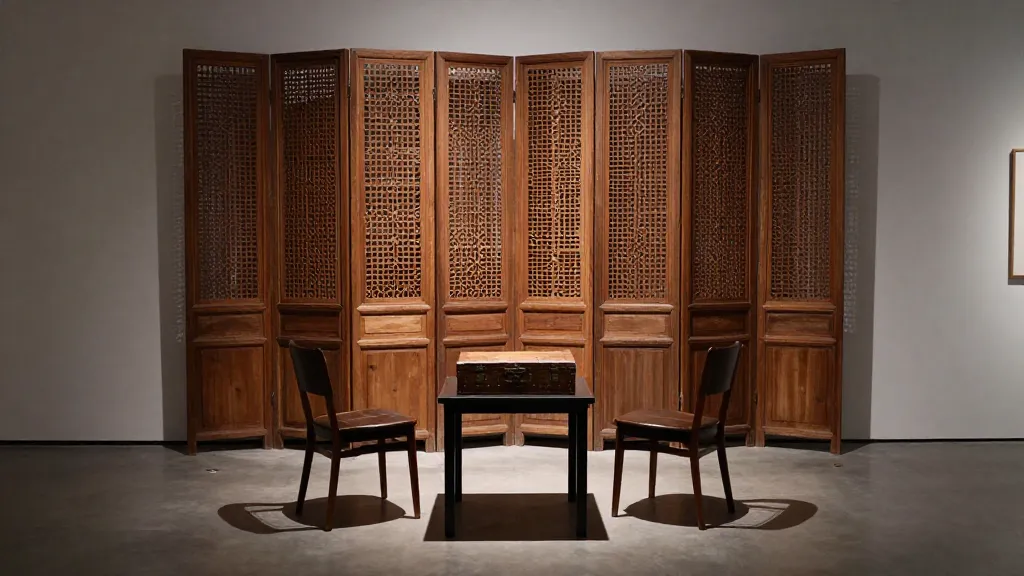


- Amale Khlat is a Lebanese-British artist based in London.
- She argues that silence has become 'more dangerous and more complicit' in the age of digital war imagery.
- Her 2025 installation 'The Archive of Silence' critiques institutional memory and arms sponsorship.
- Khlat studied at Penninghen (Paris) and the Royal College of Art (London).
- Her work uses screens and concealment to force viewers to confront their own spectatorship.
Lebanese-British artist Amale Khlat argues that silence is no longer passive. In a world saturated with real-time images of war and displacement, she contends that silence has become “both more dangerous and more complicit.”
Khlat’s work rejects the quick emotional release offered by graphic imagery. Instead, her installations use concealment, mirrors, and archival objects to trap viewers in discomfort. She aims to transform spectators into participants who must reckon with what they choose not to see.
“The direct image of suffering does something very specific to a viewer,” Khlat says. “It produces an immediate emotional response that closes as quickly as it opens. You feel something. Then you move on.”
Her 2025 installation, The Archive of Silence, staged at London’s Handbag Factory Gallery, exemplifies this approach. The piece depicts a war museum sponsored by an arms manufacturer. It features two empty chairs, a folding screen, and an archival box holding items deemed unfit for display.
Khlat describes the silence in the work not as emptiness, but as a decision. “Someone has decided what belongs in an archive and what does not,” she explains. The sponsorship makes that exclusion visible, highlighting how institutions frame public memory.
Born to Lebanese journalists during the civil war, Khlat grew up between Lebanon, France, and the UK. Her practice addresses displacement and the politics of memory through multidisciplinary installations. She studied at Penninghen in Paris and earned an MA with distinction from the Royal College of Art in London.
Khlat uses screens—lattice structures, one-way mirrors, and printed surfaces—to mediate looking. These elements force viewers to see themselves reflected in the act of witnessing. “The screen produces a constant present tense in which nothing accumulates,” she notes. Her work slows that process down.
In The Testimony of a Refugee (2018), unlabelled cherry tree roots and amber resins require visitors to build context through attention rather than instruction. The work asks viewers to sit with ambiguity, challenging the habit of scrolling past suffering without depth.
Khlat believes art cannot solve political failures or fatigue. Instead, it holds contradictions open. “Art does not need to produce agreement, consensus, action,” she says. It offers a space to feel the weight of distance and indifference without demanding a resolution.
Corrections: [email protected]