Brazil Targets Rare Earth Independence Amid China’s Dominance and Environmental Concerns
Seeking to reduce reliance on Chinese exports, Brazil is expanding rare earth exploration despite significant environmental risks and the potential for future cooperation with Beijing.
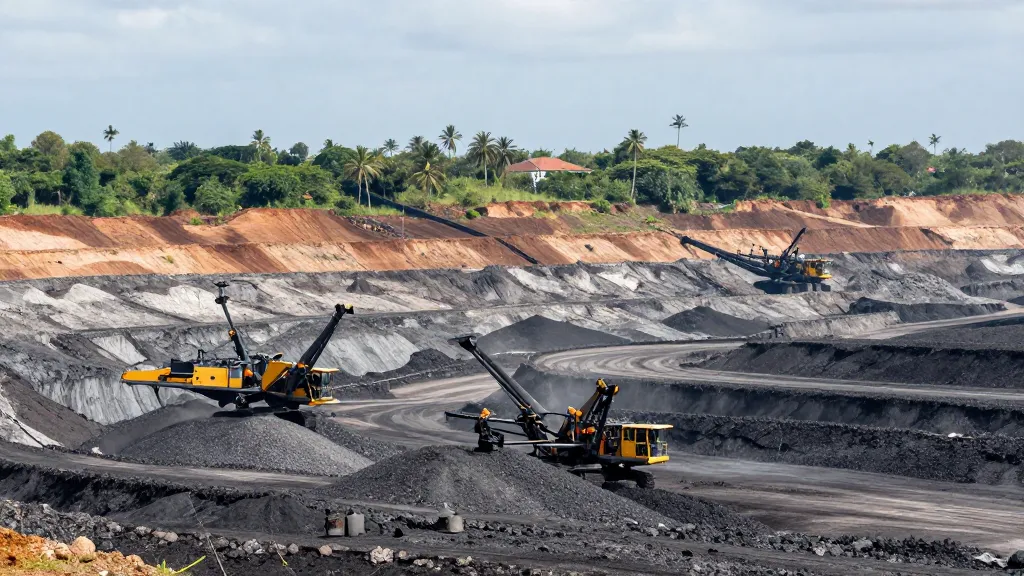


- China supplies 85–90% of the world's rare earth materials and recently banned exports of processing technology.
- Brazil holds the world's third-largest rare earth reserves and aims to become a top-five global producer.
- The Serra Verde mine in Brazil began production in January 2024, targeting 5,000 tonnes annually.
- Rare earth mining is linked to severe environmental pollution, as seen at China's Bayan Obo mine.
- Demand for critical minerals is expected to grow nearly sevenfold by 2030 to support green energy transitions.
Brazil is intensifying its efforts to explore and produce rare earth elements, aiming to break away from China’s near-monopoly on the global supply of these critical minerals. China currently supplies between 85% and 90% of the world’s rare earth materials, a dominance that grants Beijing significant leverage over global technological and green energy industries.
China’s Strategic Control
China has recently tightened its grip on the sector. In November 2023, Beijing announced stricter export controls requiring detailed reporting of metal types and final destinations. By December 2023, China banned the export of rare earth processing technologies, a move designed to hinder other nations from developing independent supply chains.
The Chinese government has also expressed heightened sensitivity regarding foreign interest in its resources. In January 2024, the Ministry of State Security published a comic strip depicting foreign spies attempting to steal mineral technology, while state-backed media alleged that countries including the United States, Japan, and members of the European Union engage in espionage to access China’s reserves.
Brazil’s Ambitions
With the world’s third-largest rare earth reserves, Brazil sees an opportunity to become a top-five global producer. The country’s first major mining project, Serra Verde in Goiás state, began production in January 2024 and aims to extract 5,000 tonnes annually at full capacity.
This expansion aligns with global climate goals. According to the International Energy Agency, demand for critical minerals is expected to grow nearly sevenfold in the next five years to support net-zero emissions targets by 2050. Rare earths are essential components for electric vehicles and wind power infrastructure.
The Environmental Paradox
Despite their role in green technology, rare earth extraction carries a heavy environmental toll, often referred to as the “rare earth paradox.” Mining and processing generate toxic waste, consume vast amounts of water, and release harmful pollutants.
In China, the Bayan Obo mine in Inner Mongolia—responsible for 45% of global production in 2019—has been described by Science News as “one of the most polluted places on earth.” Local communities have reported health issues linked to heavy metal contamination, and toxic tailings ponds pose ongoing risks.
Risks for Brazil
Brazil faces its own challenges in managing this industry responsibly. The country has a history of mining disasters, including the 2015 Mariana dam collapse that killed 19 people and the 2019 Brumadinho rupture that claimed 270 lives. Experts warn that weak regulations and lax enforcement could lead to similar tragedies or uncontrolled illegal mining.
José Gomes Landgraf, a professor at the University of São Paulo, highlighted concerns about “out-of-control mining” in areas with ionic clay deposits. He noted that illegal minerals have previously entered global supply chains, citing a 2022 report revealing that major tech companies used gold illegally mined in Brazil.
Future Cooperation
While Brazil seeks independence from Chinese exports, experts suggest cooperation may be inevitable. Xianbin Yao, a lecturer at De La Salle University, argued that partnering with China could allow other nations to benefit from established technologies and avoid “reinventing the wheel.”
Such cooperation is already occurring elsewhere; Canada’s Nechalacho mine project received a 9.9% stake from Chinese company Shenghe Resources in late 2023. In Brazil, industry representatives visited China in June 2024 to seek strategic partnerships for magnet production, though no federal-level agreements have been announced.
Corrections: [email protected]