Global Protests Demand Freedom for Venezuela Amid Repression
Venezuelans and supporters worldwide rallied in August and September to protest Nicolás Maduro’s regime, following disputed elections and intensified crackdowns on opposition leaders.
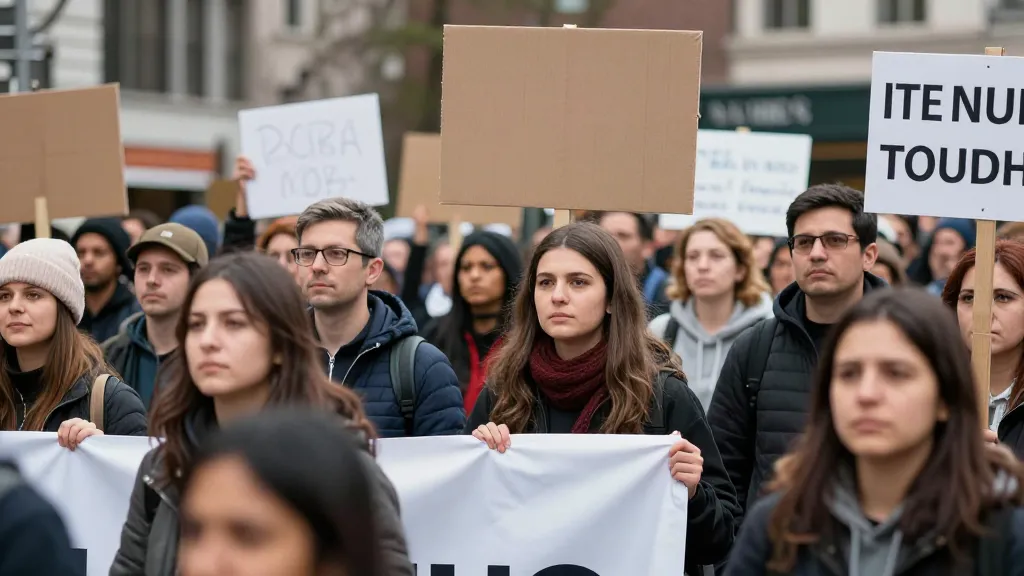


- Major protests occurred on August 17 and September 28, 2024, in cities including Edmonton, Bogotá, and Caracas.
- The demonstrations were a response to the disputed July 28 presidential election that kept Nicolás Maduro in power.
- Opposition leader Edmundo González Urrutía fled to Spain in September to avoid imprisonment by the regime.
- María Corina Machado continues to lead resistance efforts from within Venezuela while González operates from abroad.
- Protesters emphasized peaceful resistance and highlighted systematic human rights violations under the current government.
Thousands of people across multiple continents united in a coordinated series of protests demanding freedom for Venezuela. The demonstrations, characterized by the chant “Libertad, libertad, libertad,” took place primarily on August 17 and September 28, 2024. These events were organized as a response to the political crisis deepening under President Nicolás Maduro’s administration.
Global Solidarity
The first major wave of demonstrations, known as “La Gran Protesta por la Verdad” (The Great Protest for the Truth), occurred on August 17. Participants gathered in cities including Edmonton, Canada; Bogotá, Colombia; and Caracas, Venezuela. The protests were driven by a shared sense of urgency and solidarity among Venezuelans living abroad and those remaining in the country.
In Edmonton, protesters described an atmosphere of community and strength. Gisela, who emigrated to Canada 18 years ago after being dismissed from her job as an oil worker during Hugo Chávez’s regime, noted that every corner of the world holds a piece of Venezuela. She emphasized the instant connection felt among fellow Venezuelans regardless of background.
Similar sentiments were expressed in Bogotá. José, a web designer who has lived in Colombia for seven years, described hearing the Venezuelan national anthem and accents as an incredible experience that united participants with a single purpose: to ensure Venezuela’s voice was heard globally.
Political Context and Repression
The protests gained momentum following the July 28 presidential election, which opposition leaders and international observers widely condemned as fraudulent. The results kept Nicolás Maduro in power despite evidence of electoral irregularities.
In the months since, repression against dissent has intensified. Opposition leader Edmundo González Urrutía, who fled to Spain in September after refusing to attend a hearing at Venezuela’s Supreme Tribunal of Justice, stated he needed to be free to tell the world what was happening in his country. His exile has sparked mixed reactions; while some worry it undermines the opposition’s claim to the presidency, others are relieved that the 75-year-old avoided imprisonment.
Meanwhile, María Corina Machado continues to lead resistance efforts from within Venezuela. She assured supporters that González would fight from abroad with the diaspora, while she would remain inside the country. Julia, a 67-year-old seamstress in Venezuela, expressed unwavering support for Machado, stating, “We stand with María Corina until the end.”
Voices of Resistance
The September 28 event, titled “Gran Protesta Mundial por la Libertad de Venezuela” (Great Global Protest for Freedom in Venezuela), marked two months since the disputed election. Protesters emphasized that the movement was not just political but also a reaffirmation of cultural identity and human rights.
Héctor, who moved to Canada from northern Venezuela in 2020, highlighted the role of the diaspora in amplifying messages about systematic human rights violations. “This is a call for international organizations to grasp the scale of the systematic human rights violations in Venezuela,” he said.
In Venezuela, despite state crackdowns, protesters reported moments of defiant hope. Krisbel, a 25-year-old nurse, described seeing elderly protesters, some in wheelchairs, shouting “Y va a caer!” (“He’s going to fall!”) as a source of immense faith. Julia added that peaceful protest, singing, and banging pots and pans were the methods chosen to reclaim the country without violence.
Looking Ahead
Participants stressed the importance of maintaining pressure both inside and outside Venezuela. Luis, a systems engineer in Bogotá who left Venezuela seven years ago, expressed his desire to return and help rebuild the nation’s economy and education system. He noted that although he could not vote, his resolve remained unshaken.
The global outcry underscores a unified demand for democratic rights, including free speech, voting integrity, and protection from state retribution. As Héctor explained, “The government systematically crushes any dissenting voice.” Yet, the continued mobilization of the diaspora and domestic activists suggests that the fight for Venezuela’s freedom is far from over.
Corrections: [email protected]